TWO-MINUTE SUMMARY
A megalithic hill, subsurface anomalies and the retracted pyramid claim.
WHAT THE RECORD ACTUALLY SAYS
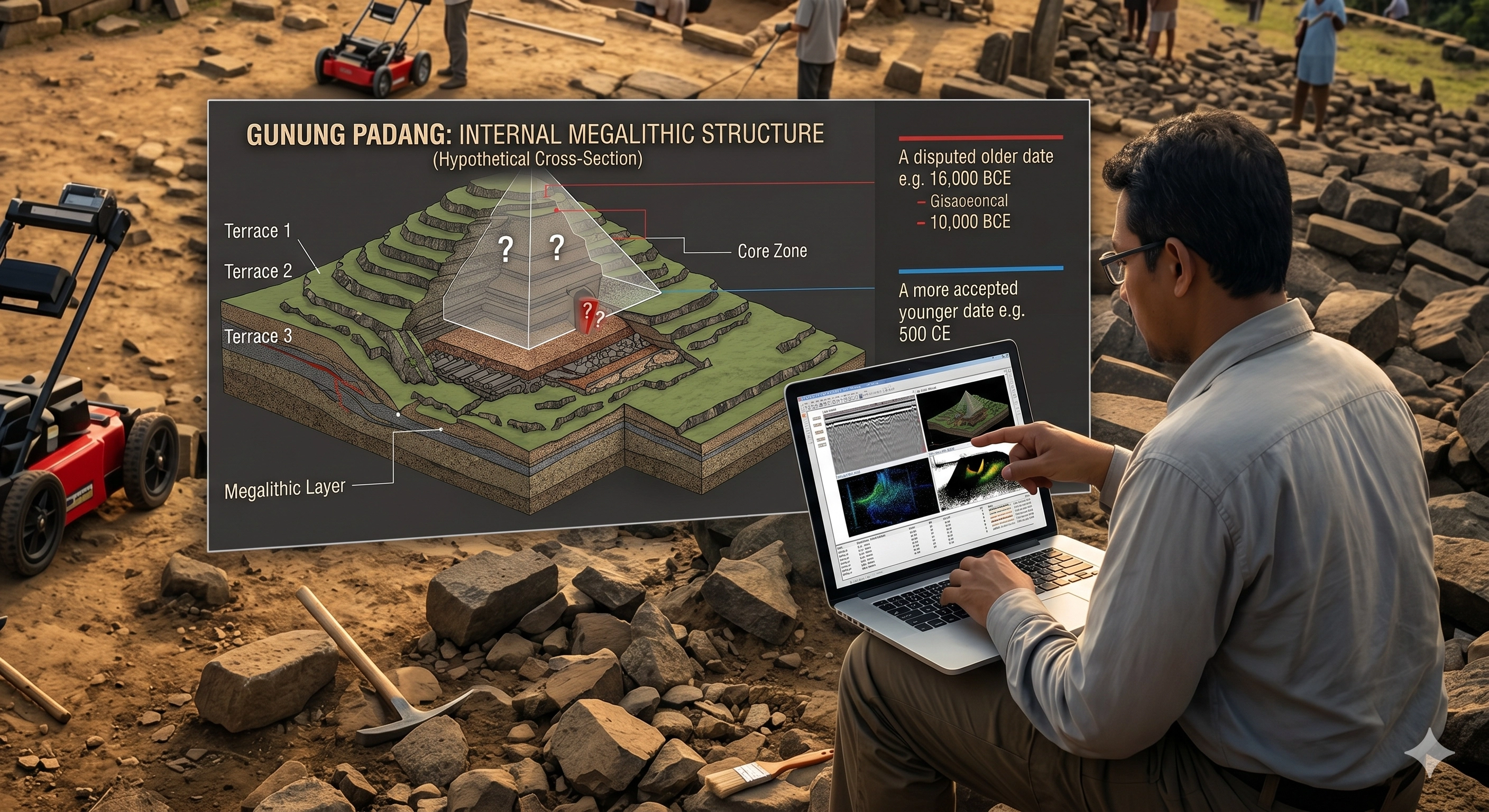
Gunung Padang is a culturally significant megalithic site in West Java, Indonesia. Its documented surface terraces are distinct from later claims that the hill contains a Paleolithic buried pyramid. Geophysical surveys reported subsurface anomalies, but a 2023 paper assigning very early construction dates was retracted after concerns about radiocarbon methodology. The record distinguishes the confirmed surface monument, the detection of anomalies and the unverified interpretation of those anomalies as ancient construction.
TIMELINE
~32 million years ago
The Karyamukti volcano is active. Andesitic-basalt magma cools into columnar joints—naturally rectangular stone blocks.
c. 2,500 BCE – 500 CE
Austronesian peoples arrange the naturally columnar blocks into a terraced structure: five platforms, ~400 steps. Largest punden berundak in Indonesia.
1914
Dutch colonial report first mentions the site.
1979
Three farmers rediscover the overgrown site. National Archaeology Research Centre notified.
1998
Designated a Provincial-level Cultural Heritage Site.
2011–2015
Danny Hilman Natawidjaja conducts geophysical surveys detecting underground anomalies.
2022
Graham Hancock features Gunung Padang in Netflix series 'Ancient Apocalypse.'
October 2023
Natawidjaja et al. publish paper claiming multi-layered buried pyramid dating to 25,000 BCE.
March 2024
Archaeological Prospection retracts the paper. Radiocarbon dating methodology deemed flawed.
Post-retraction
Debate continues. Further excavation needed to resolve underground structure questions.
SELECTED EVIDENCE
The surface terraces and their stonework are documented. Geophysical surveys have reported subsurface anomalies, but an anomaly is not in itself evidence of human construction. The 2023 publication assigning very early construction dates was later retracted because the dated samples did not establish the age of built structures.
WHAT REMAINS UNCERTAIN
The central distinction is between detection and interpretation. The available record supports a significant megalithic landscape and warrants continued archaeological study. It does not support a demonstrated Paleolithic pyramid or a settled chronology for every subsurface feature.
SELECTED SOURCES
Selected source notes are being prepared. The public record will be expanded as material is reviewed.
Continue research