Ver Archivo
PLAUSIBLE
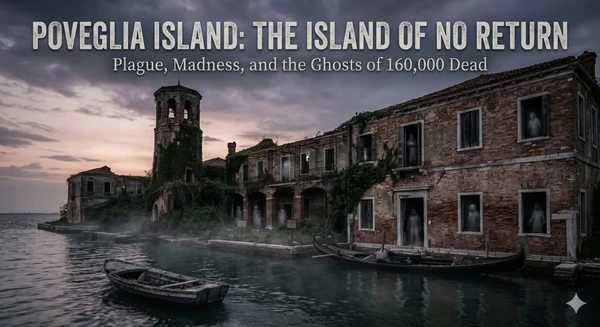
ISLA DE POVEGLIA: La Isla del No Retorno — Peste, Locura y los Fantasmas de 160,000 Muertos
421
Last updated: 18 Apr 2026
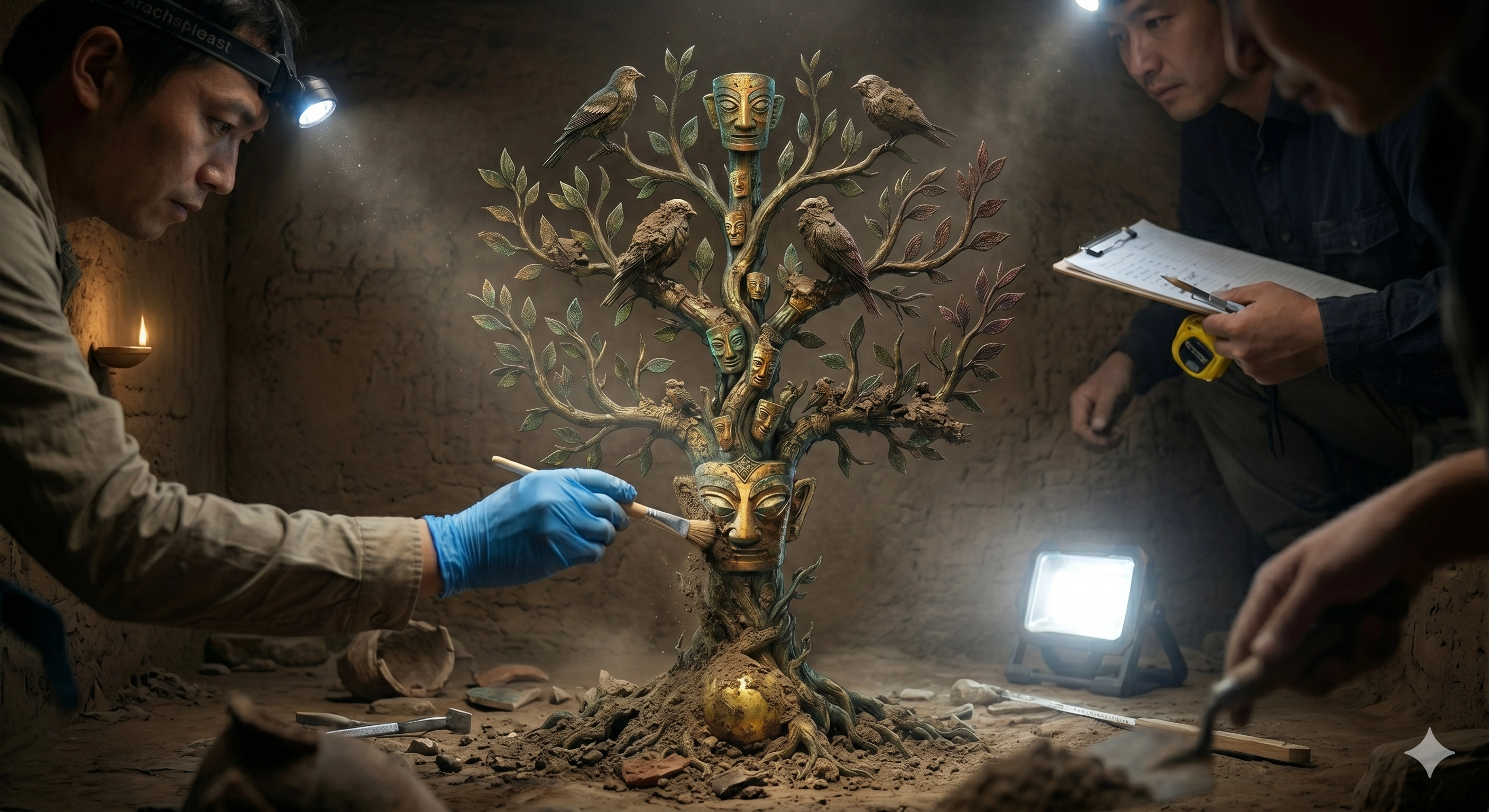
En 1986, obreros en la provincia de Sichuan descubrieron dos fosas sacrificiales con artefactos extraordinarios de la Edad del Bronce: máscaras de bronce gigantes con ojos cilíndricos, una estatua de 2.6 metros, un árbol sagrado de 4 metros, máscaras de oro, jade, más de 60 colmillos de elefante—todo destruido, quemado y enterrado deliberadamente. Datados en los siglos XII-XI a.C., contemporáneos de la dinastía Shang pero completamente diferentes. Sin registros escritos ni restos humanos. Entre 2020-2022, 13,000+ artefactos nuevos. En 2025, bronces pintados extienden la línea temporal en ~1,000 años.
Sanxingdui is arguably the most important archaeological discovery of the late 20th century—and certainly the most mysterious. The bronzes look like nothing else in the known archaeological record. They are not Chinese in the conventional sense—they bear no resemblance to the ritual vessels of the contemporary Shang Dynasty. They are not Mesopotamian, not Egyptian, not Mesoamerican. They are their own thing: a visual language of supernatural faces, sacred trees, and hybrid creatures that appears fully formed, without identifiable artistic predecessors, in a walled city in the mountains of Sichuan.
The British Museum's Task Rosen called the Sanxingdui bronzes "more outstanding than the Terracotta Army." The Bowers Museum called them "the ninth wonder of the world." And the objects themselves—those enormous masks with their cylindrical protruding eyes, staring outward with an expression that is simultaneously human and profoundly alien—continue to generate debate about whether they depict gods, ancestors, priests in ritual costume, or something else entirely.
Sanxingdui is not a lost civilization in the sense that it vanished without a trace. Traces are exactly what it left—thousands of them, exquisite and bewildering. What it did not leave is an explanation.
Hua Sun, a historian from Peking University, described his reaction to first seeing the 2.6-meter bronze standing figure: he was shocked. A human sculpture was entirely unexpected in a Chinese Bronze Age context.
Rowan Flad of Harvard University noted that Sichuan was systematically excluded from the dominant narrative of Chinese civilization's origins. Sanxingdui demonstrated that a parallel, independent, and equally sophisticated civilization had existed in western China.
The 4th-century Chronicles of Huayang describe the founding king of Shu, Cancong, as having "protruding eyes"—a detail that eerily matches the most distinctive feature of the Sanxingdui bronze masks.
Ran Honglin of the Sichuan Provincial Cultural Relics Institute described the 2022 discovery of a hybrid human-head-snake-body statue as evidence of "early exchange and integration of Chinese civilization."
Around 1600 BC, someone built a city on the banks of the Yazi River in central Sichuan. It was a metropolis: a walled city of 3.6 square kilometers, with walls 40 meters wide at the base and up to 10 meters high. Inside, the city was divided into districts: palaces to the north, religious complexes to the south. This was Sanxingdui—the Three Star Mounds—capital of a civilization that developed an artistic tradition unlike anything else in the ancient world.
The Shang made vessels. Sanxingdui made faces. The masks are the defining artifacts. The largest measures 71 cm high by 131 cm wide. The eyes project outward on cylindrical stalks. The ears extend laterally like wings. They were not made to be worn by humans but to be displayed. Who do they depict? The Chronicles of Huayang describe king Cancong as having protruding eyes. The masks do not explain themselves. They stare outward, as they have stared for three thousand years.
A bronze tree nearly four meters tall stands on a triangular base. Nine branches extend outward, each bearing a bird. The tree has been compared to the Fusang tree of Chinese mythology—the cosmic tree where the sun rests. Whether the Sanxingdui tree represents Fusang, a different mythological tree, or something entirely unknown is unresolved.
Sometime around 1200–1100 BC, the people of Sanxingdui gathered their most sacred objects and destroyed them. They smashed the bronze masks. They broke the standing figure. They burned the sacred tree. They buried everything in rectangular pits. The destruction was not random—it was systematic, thorough, and deliberate.
Around 1000 BC, the city was abandoned. No evidence of military destruction. The population may have moved to Jinsha, where similar artifacts have been found. The people of Sanxingdui killed their own city before they left it.
Physical: 13,000+ artifacts from 8 sacrificial pits (1986 and 2020–2022). Bronze masks, figures, trees; gold masks and foil; jade tablets and scepters; ivory tusks; cowrie shells; silk traces; painted bronzes. Walled city (~3.6 km²).
Archaeological: Radiocarbon dating: 12th–11th centuries BC. City walls comparable to Shang-era Zhengzhou. Jinsha site shows cultural continuity.
Textual: Chronicles of Huayang (4th century AD): describes Kingdom of Shu, king Cancong with "protruding eyes."
Scientific (2025): Painted bronze analysis: black and red pigments. Bronze casting: copper-tin-lead alloys. Silk residue identification.
Absence of Evidence: No written language identified. No human remains found. Reason for abandonment not definitively established.