0%|~2 min read
NAHUELITO: The Lake Monster of Patagonia — Where Ancient Legend Meets Nuclear History (1910) — UNVERIFIED credibility River & Lake Mysteries case file
CLASS UNVERIFIED
1 of 2

NAHUELITO: The Lake Monster of Patagonia — Where Ancient Legend Meets Nuclear History

Category|River & Lake Mysteries
Year|1910
Credibility Grade|CLASS UNVERIFIED

Last updated: 18 Apr 2026


Quick Summary

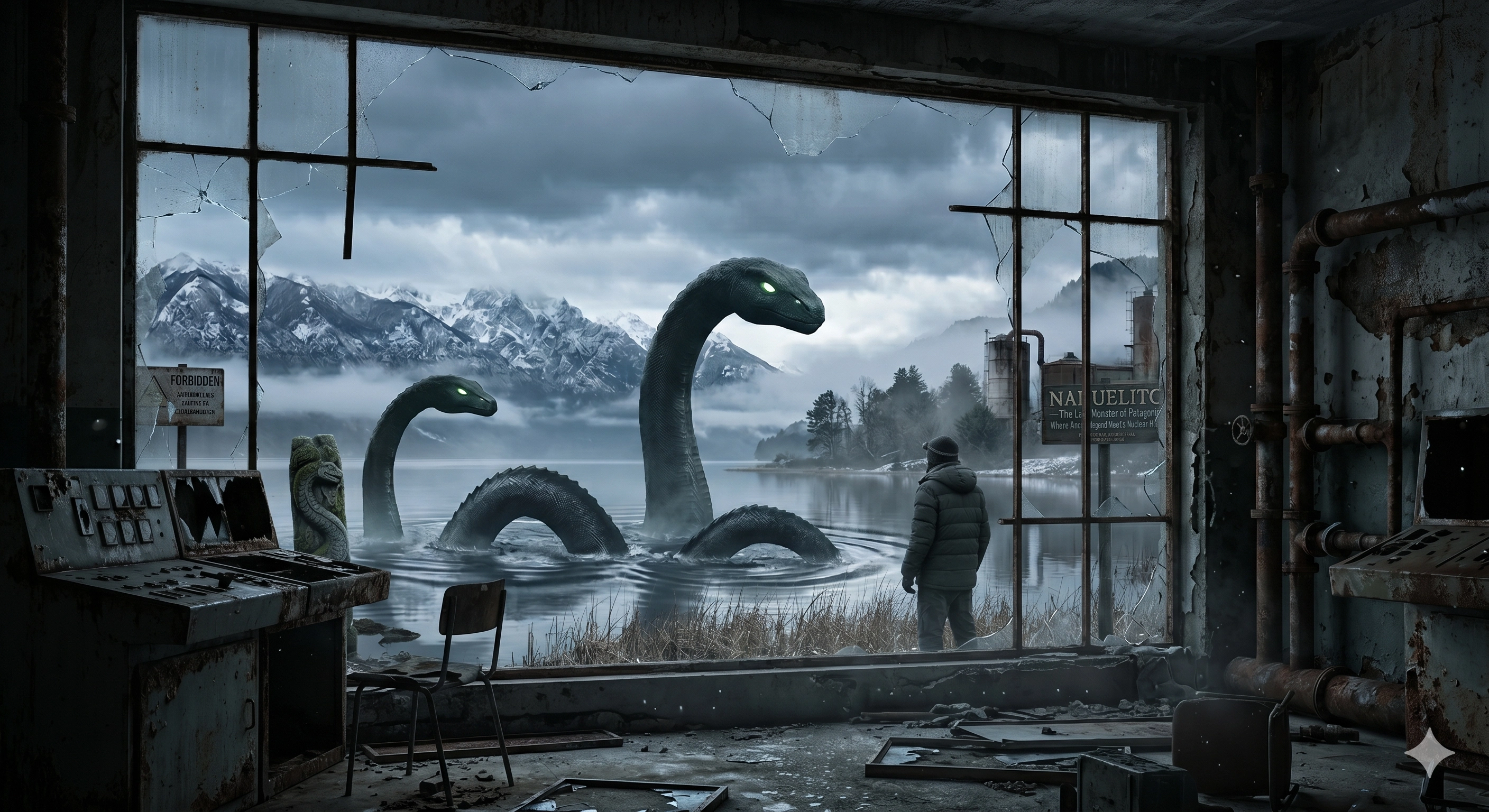
Deep in the Argentine Andes, surrounded by snow-capped mountains and forests of ancient beech and cypress, lies Nahuel Huapi Lake—a glacial body of water covering 530 square kilometers, plunging to depths of 464 meters, and holding one of South America’s most enduring cryptozoological mysteries. Since before European contact, the indigenous Mapuche and Tehuelche peoples told stories of a creature dwelling in the lake’s depths—a being they called El Cuero (“The Leather”), described as a giant stingray-like animal with a sucker mouth that dragged victims beneath the waves. In 1910, a British company manager named George Garrett reported seeing an enormous object, 15 to 20 feet in diameter and six feet above the waterline, in an inlet of the lake. His account, made public in 1922, coincided with a global wave of “living dinosaur” enthusiasm and prompted the Buenos Aires Zoo to mount the first scientific expedition to search for Nahuelito. They found nothing—but the media had already given the creature form: a plesiosaur, a marine reptile from the age of dinosaurs, somehow surviving in the cold depths of a Patagonian lake. What makes Nahuelito unique among lake monsters is the extraordinary layer of real history that surrounds it. On Huemul Island, in the very same lake, the government of Juan Domingo Perón built a secret nuclear fusion laboratory in 1949, run by an Austrian scientist named Ronald Richter who promised to harness the power of the stars. The project was a spectacular fraud—but before it was debunked, its massive electrical discharges made windows rattle in Bariloche, and the secrecy surrounding the island fueled wild speculation. Some theorists have suggested that Nahuelito is the product of a nuclear mutation: a creature born from Richter’s experiments gone wrong. The creature has never been captured, measured, or conclusively photographed. Sightings continue. Bariloche, the resort city on the lake’s southern shore, has embraced the legend commercially, much as Inverness has embraced Nessie. And the lake itself—glacial, cold, deep, and ancient—continues to keep whatever secrets it holds beneath 464 meters of water so clear it appears black.


Key Facts

CountryFloating logs; accumulated decomposing organic matter; gas bubbles; sheep herds swimming across shallow sections (appearing as single large creature from distance); waves and wind effects; confirmed hoaxes (2006 photographs)
Year1910
TypeLake Cryptozoology / Indigenous Legend / Cultural Phenomenon

Overview

Nahuelito belongs to a global family of lake monsters—a category of cryptid reported from deep, cold, glacial lakes on every inhabited continent. Loch Ness in Scotland, Lake Champlain in Vermont, Lake Okanagan in British Columbia, Lake Storsjö in Sweden, and Nahuel Huapi in Argentina all share common features: glacial origin, great depth, cold and often opaque water, surrounding wilderness, indigenous traditions of water creatures, and a steady stream of modern sightings that have never produced conclusive evidence. What distinguishes Nahuelito is context. Nahuel Huapi Lake is not an ordinary body of water. It is the centerpiece of Argentina’s first national park (established 1934). It is surrounded by one of the country’s premier tourist destinations. Its shores hosted a colony of German and Austrian emigres after World War II, some of whom were rumored to have included high-ranking Nazis. One of its islands was the site of the most spectacular scientific fraud of the 20th century—a fake nuclear fusion reactor built with Perón’s money. And its indigenous name carries overtones of sorcery and transformation. Nahuelito is not just a monster. It is a symbol—of the lake’s mystery, of Patagonia’s wildness, of the human desire to believe that the depths of the earth still hold secrets that science has not reached.
Listen to Case File
~17 min

Timeline

Pre-colonial era

Mapuche and Tehuelche peoples describe El Cuero and other aquatic creatures in Nahuel Huapi and surrounding lakes. The Mapuche word Nahuel itself carries associations with transformation and sorcery.

16th century

Early Portuguese sailors report monsters among Patagonia’s forests and waterways.

1880

American gold miner Martin Sheffield settles in Patagonia (having followed the trail of Butch Cassidy and the Sundance Kid). He will later report a “long-neck, swan-headed creature” in a lagoon near Epuyén, ~90 miles south of Bariloche.

1910

George Garrett, managing a company on Nahuel Huapi Lake, observes a large creature approximately 400 meters away. Visible portion: 5–7 meters long, ~2 meters above the waterline. Visible for 15 minutes. Local people confirm similar stories from indigenous tradition.

1912

Arthur Conan Doyle publishes “The Lost World,” popularizing the idea of surviving prehistoric creatures in remote South America.

1922

Garrett’s 1910 sighting is published in the Toronto Globe. Clemente Onelli, director of Buenos Aires Zoo, organizes the first scientific expedition to Patagonian lakes. Martin Sheffield provides additional testimony. Major Argentine newspapers (La Nación, La Razón, La Prensa, Caras y Caretas) give the creature plesiosaur form in illustrations. Expedition finds no evidence. The lake where the presence was most claimed is named Laguna del Plesiosaurio.

1934

Nahuel Huapi National Park is established—Argentina’s first national park.

1949–1952

Proyecto Huemul: Perón’s secret nuclear fusion laboratory is built on Huemul Island in Nahuel Huapi Lake by Austrian scientist Ronald Richter. The project costs over 300 million 2022 USD equivalent. A 12-meter concrete bunker houses the “thermotron.” Massive electrical discharges rattle windows in Bariloche. In 1951, Perón announces Argentina has achieved controlled fusion—the claim is false. Physicist José Antonio Balseiro debunks the project in 1952. Richter is jailed. The equipment is repurposed for legitimate science (Instituto Balseiro, still operating in Bariloche).

1960s

Tourists and fishermen report sightings of a large humpbacked creature. The Argentine Navy reportedly pursues an “unknown submarine” in the lake. The mystery submarine theory becomes an alternative explanation for Nahuelito sightings.

1988

Anonymous photographs of a long-necked object near the coast of Bariloche are published in a Río Negro newspaper magazine supplement. Accompanied by a note: “It is not a log of whimsical shapes. It is not a wave. Nahuelito showed his face.” The images are inconclusive.

2006

Anonymous photographer delivers two photographs to El Cordillerano newspaper with a note: “It is not a twisted tree trunk. It is not a wave. Nahuelito has shown his face.” Both photographs are subsequently determined to be a hoax.

2000s–2020s

Sightings continue sporadically. Sci Fi Channel’s “Destination Truth” investigates (Season 1). Filmmaker Miguel Ángel Rossi produces documentary “Bajo Superficie.” Bariloche tourism industry incorporates Nahuelito imagery. Plesiosaur logo appears on souvenirs, signage, and promotional material.

Witness Accounts

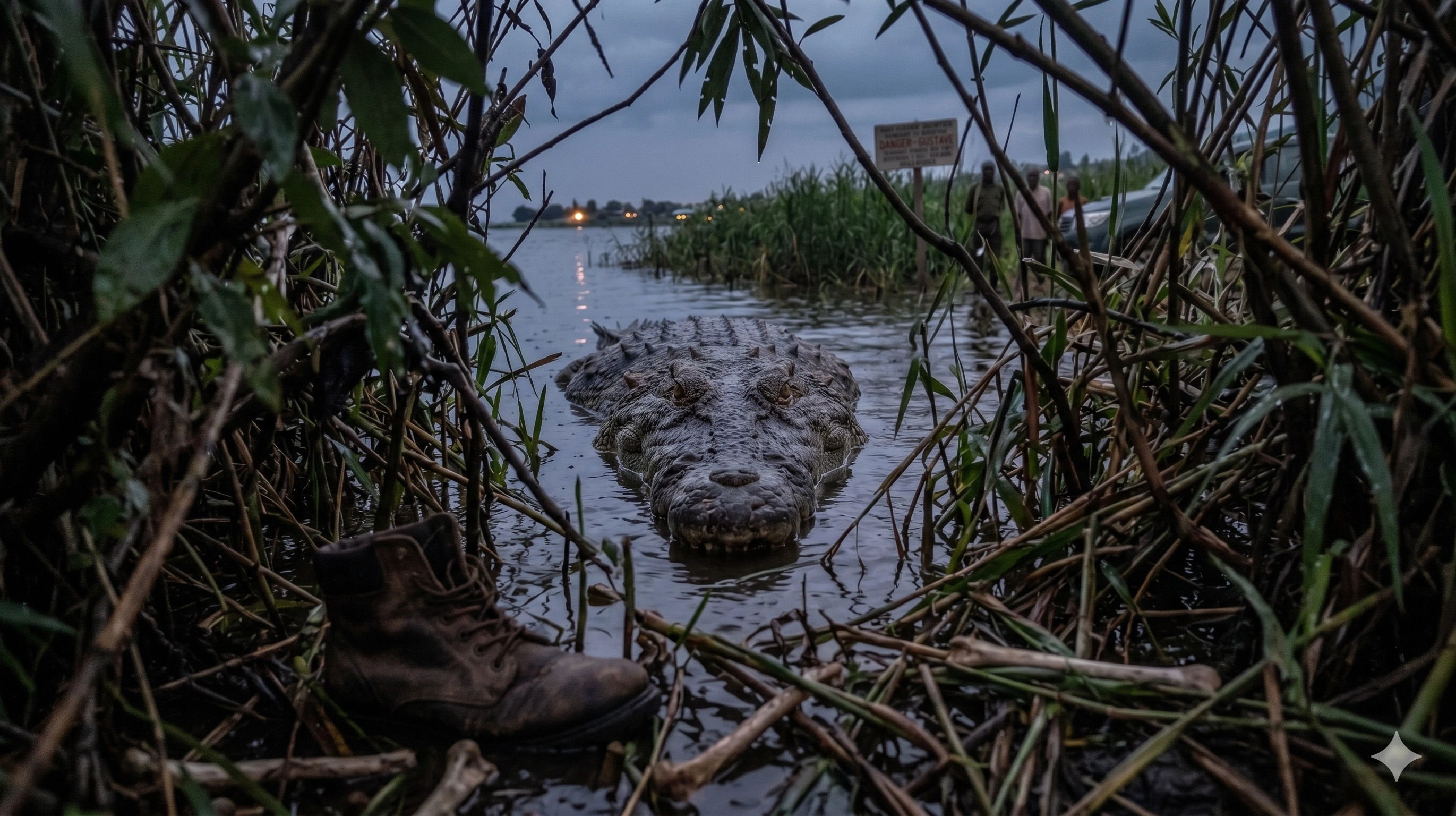
George Garrett’s 1910 account remains the most detailed early sighting: “We were beating windward up an inlet called Pass Coytrue, which bounded the peninsula. This inlet was about five miles in length, a mile or so in width, and of an unfathomable depth. Just as we were near the rocky shore of the peninsula, before tacking, I happened to look astern towards the centre of the inlet, and, to my great surprise, I saw about a quarter of a mile to leeward, an object which appeared to be 15 or 20 feet in diameter, and perhaps six feet above the water.” The object was visible for approximately 15 minutes before submerging. Local people confirmed similar accounts from indigenous oral tradition. Martin Sheffield, the American gold miner who had arrived in Patagonia pursuing the trail of Butch Cassidy, described a “long-neck, swan-headed creature” in a lagoon near Epuyén in the early 1920s. His report to Clemente Onelli at the Buenos Aires Zoo initiated the 1922 expedition. Multiple tourists and fishermen in the 1960s reported a large, humpbacked creature surfacing in the summer months when the lake was calm. Descriptions consistently mentioned: sudden swelling of water and spray preceding the surfacing; a dark, humped shape; and visibility lasting from seconds to several minutes before the creature submerged. The 1988 and 2006 anonymous photographers both used nearly identical language (“It is not a tree trunk. It is not a wave.”), suggesting either a continuity of belief in the creature’s reality or a deliberate callback by the 2006 hoaxer. The recurrence of anonymous photographic submissions—always accompanied by notes asserting authenticity and always declining to provide personal information—is itself a recurring pattern in lake monster cases worldwide.

▶ CINEMATIC SECTIONNarrative Reconstruction

I. The Lake Before Names Nahuel Huapi was born from ice. During the last glacial maximum, roughly 20,000 years ago, enormous rivers of ice ground their way through the Andean valleys of what is now northern Patagonia, carving deep U-shaped troughs into the bedrock. When the glaciers retreated, the troughs filled with meltwater—pure, cold, and blue. The result was a chain of lakes running along the eastern flank of the Andes, each one a mirror of the mountains that created it. Nahuel Huapi is the largest of these. It stretches across 530 square kilometers of mountain terrain, branching into seven arms that reach deep into forested valleys. Its maximum depth is 464 meters—nearly half a kilometer straight down into darkness. At that depth, the water is barely above freezing, perpetually dark, and under pressures that would crush a human chest. The surface temperature averages 7°C even in summer. Hypothermia is a constant risk for anyone who falls in. The water is extraordinarily clear. On calm days, you can see down through ten, twenty, thirty meters of blue that darkens to indigo and then to black. What lies below the visible zone is unknown to casual observation. Sonar surveys have mapped the bottom, but 464 meters of cold, clear water is an excellent medium for hiding things—or for imagining them. The Mapuche people, who have inhabited these lands for millennia, understood the lake as a place of power and danger. The word Nahuel means “puma” in Mapudungun—but it carries a deeper resonance, referring to a man who, through sorcery, can transform into a puma. Huapí means “island.” The lake is the Island of the Shape-Shifter, the Island of Transformation. It is a place where things are not what they seem. The Mapuche and the Tehuelche told stories of a creature that lived in the depths. They called it El Cuero—“The Leather”—because of its smooth, hide-like skin. It was described as a giant stingray with a sucker-like mouth that could drag a person beneath the surface in an instant. Parents warned children to stay away from the shore at dusk and dawn, when El Cuero fed. These stories predated European contact by centuries. They were not influenced by plesiosaur mania, by newspaper illustrations, or by tourism marketing. They were the indigenous people’s honest account of what they believed lived in their lake. II. The Golden Age of Monsters (1910–1922) The early twentieth century was the golden age of monster hunting. Arthur Conan Doyle published “The Lost World” in 1912, imagining a South American plateau where dinosaurs still roamed. The public was fascinated by the possibility that prehistoric creatures might survive in remote, unexplored places. And Patagonia—vast, wild, barely mapped—was the most plausible place on Earth for such survival. In 1910, George Garrett saw something in Nahuel Huapi Lake that he could not explain. He was a practical man, a company manager, not a fantasist. What he described—a large, rounded object, 15 to 20 feet across, rising six feet above the waterline, visible for a quarter of an hour—could have been many things: a mass of floating vegetation, a decomposing log, a gas eruption from the lake bed. Or it could have been something else. Garrett’s account reached the Toronto Globe in 1922, at exactly the moment when the world was primed to believe in living dinosaurs. Martin Sheffield—gold miner, former sheriff, a man who had come to Patagonia chasing Butch Cassidy—had already written to Clemente Onelli at the Buenos Aires Zoo about a “long-neck, swan-headed creature” in a lagoon south of Bariloche. Onelli organized an expedition. The Buenos Aires press turned it into a sensation. La Nación, La Razón, La Prensa, and the illustrated magazine Caras y Caretas all ran feature stories, complete with dramatic illustrations of a plesiosaur rising from the lake. The creature had been given a shape—and once a shape is given, it is almost impossible to take it back. The expedition found nothing. It did not matter. Nahuelito was born—not from the lake, but from the newspapers. III. The Bomb That Wasn’t (1949–1952) Twenty-seven years after the plesiosaur expedition, something genuinely strange began happening on Nahuel Huapi Lake—not in its depths, but on one of its islands. In 1949, President Juan Domingo Perón authorized the construction of a secret nuclear laboratory on Huemul Island, a small, wooded island two kilometers off the shore of Bariloche. The project was placed under the direction of Ronald Richter, an Austrian-born scientist who had spent the war years in Germany and who promised Perón something that no other nation had achieved: controlled thermonuclear fusion—the power of the sun, harnessed in a bottle. It was a lie, but it was a magnificent lie, and Perón bought it completely. For three years, Richter built his “thermotron” inside a 12-meter-high concrete bunker on the island. He conducted experiments that produced enormous electrical discharges, flashes of light that could be seen from Bariloche, and bangs that rattled windows across the lake. In 1951, Perón went on national radio and announced to the world that Argentina had achieved controlled nuclear fusion. It was a global sensation—and a complete fraud. A commission of Argentine scientists, led by physicist José Antonio Balseiro, visited the island in 1952 and quickly determined that Richter’s work was a sham. Richter was arrested, the project was shut down, and the laboratory was eventually repurposed for legitimate nuclear research (the Balseiro Institute, one of Latin America’s premier physics research centers, is still located in Bariloche). But the story of the bomb that wasn’t had already taken root. And in a lake that already had a monster, it was inevitable that the two stories would merge. The theory arose that Nahuelito was a nuclear mutation—a creature created or altered by the radiation from Richter’s experiments. It is a beautiful theory. It is also almost certainly wrong—Richter never achieved fusion, his experiments produced no radiation, and the lake shows no signs of contamination. But as a narrative, it is irresistible: the monster born from the bomb that wasn’t. IV. Submarines, Sheep, and Shadows Through the second half of the twentieth century, Nahuelito sightings continued—sporadic, inconsistent, and never producing definitive evidence. The descriptions varied wildly: a giant serpent with humps, a swan with a snake’s head, an overturned boat hull, a tree stump, a long-necked plesiosaur. Length estimates ranged from 5 to 45 meters, a spread so enormous as to suggest that witnesses were not seeing the same thing—or, perhaps, were not seeing anything at all beyond the ordinary objects that a large lake regularly presents to the eye. In the 1960s, the Argentine Navy reportedly pursued an “unknown submarine” in the lake—a story that added yet another layer to the mystery. The “mystery submarine” phenomenon is a recognized cultural variant of lake monster traditions, in which mechanical or military objects in the water are conflated with living creatures. Whether the Navy actually found anything has never been confirmed. Skeptics have offered a catalogue of mundane explanations. Floating logs, which are common in forested glacial lakes, can assume shapes that from a distance resemble humps and necks. Decomposing organic matter can form large, buoyant masses that surface and submerge with changes in water temperature and gas production. Sheep—yes, sheep—sometimes swim across the shallow sections of Nahuel Huapi in herds, and from shore, a group of swimming sheep can appear as a single large, undulating creature. Gas bubbles rising from the lake bed can agitate the surface and create the impression of movement from below. And the wind, playing across 530 square kilometers of open water, can generate waves and patterns that in certain light conditions bear an uncanny resemblance to something alive. None of these explanations has definitively closed the case. This is the nature of lake monster cryptozoology: the explanations are always sufficient to explain individual sightings, but they are never sufficient to explain the persistence of the tradition—why generation after generation, in lake after lake, on continent after continent, people continue to see things in deep water that they cannot explain. V. The Lake at Dusk To understand why Nahuelito endures, you have to stand on the shore of Nahuel Huapi at dusk. The sun drops behind the Andes, and the mountains become black silhouettes against a sky that turns from gold to violet to deep blue. The lake, which during the day reflects the sky and the mountains and the forests in a mosaic of color, becomes a single flat plane of darkness. The water is still. The temperature drops. The last light catches the surface and for a moment the lake is a mirror, and then it is not a mirror but a void—a 530-square-kilometer opening into the earth, 464 meters deep, cold enough to kill, dark enough to hide anything. You cannot see what is below the surface. You cannot hear it. You can only stand on the shore and know that you are at the edge of something vastly larger than yourself, something ancient and indifferent, something that was here before the Mapuche gave it a name that means transformation and sorcery, and that will be here long after the tourists have gone home and the souvenir shops have closed and the last plesiosaur poster has faded on the last café wall. That is what Nahuelito is. Not a plesiosaur, not a nuclear mutant, not a submarine, not a sheep. Nahuelito is the feeling of standing at the edge of deep water at the end of the day and knowing—in the part of the brain that is older than language, older than civilization, older than the species itself—that something might be looking back. The lake does not confirm this. The lake does not deny it. The lake is 464 meters deep, and it keeps its own counsel.

Evidence

Testimonial Evidence: Indigenous oral traditions (Mapuche El Cuero, Tehuelche accounts) predating European contact; George Garrett (1910); Martin Sheffield (1920s); multiple tourist and fisherman accounts (1960s–present). Photographic Evidence: 1988 anonymous photographs (inconclusive); 2006 anonymous photographs (confirmed hoax). No verified photographic evidence. Physical Evidence: None. No specimens, tissue, bones, sonar returns of a living creature, or DNA evidence. Scientific Expeditions: 1922 Buenos Aires Zoo expedition (no evidence found); Sci Fi Channel “Destination Truth” investigation (inconclusive). Environmental Context: Glacial lake of great depth and cold; extremely clear water; capable of supporting large aquatic life; no evidence of any species matching the described creature. Nuclear Context: Proyecto Huemul on Huemul Island (1949–1952) produced no radiation or contamination. No scientific basis for the “nuclear mutation” theory.

Share This Archive

Community Verdict

Community Verdict