No Image
View Case File
CORROBORATED
THE DYATLOV PASS INCIDENT: Nine Hikers, Nine Deaths, One Mystery That Refuses to Die
1959|Mountain Mystery
Last updated: 19 Apr 2026
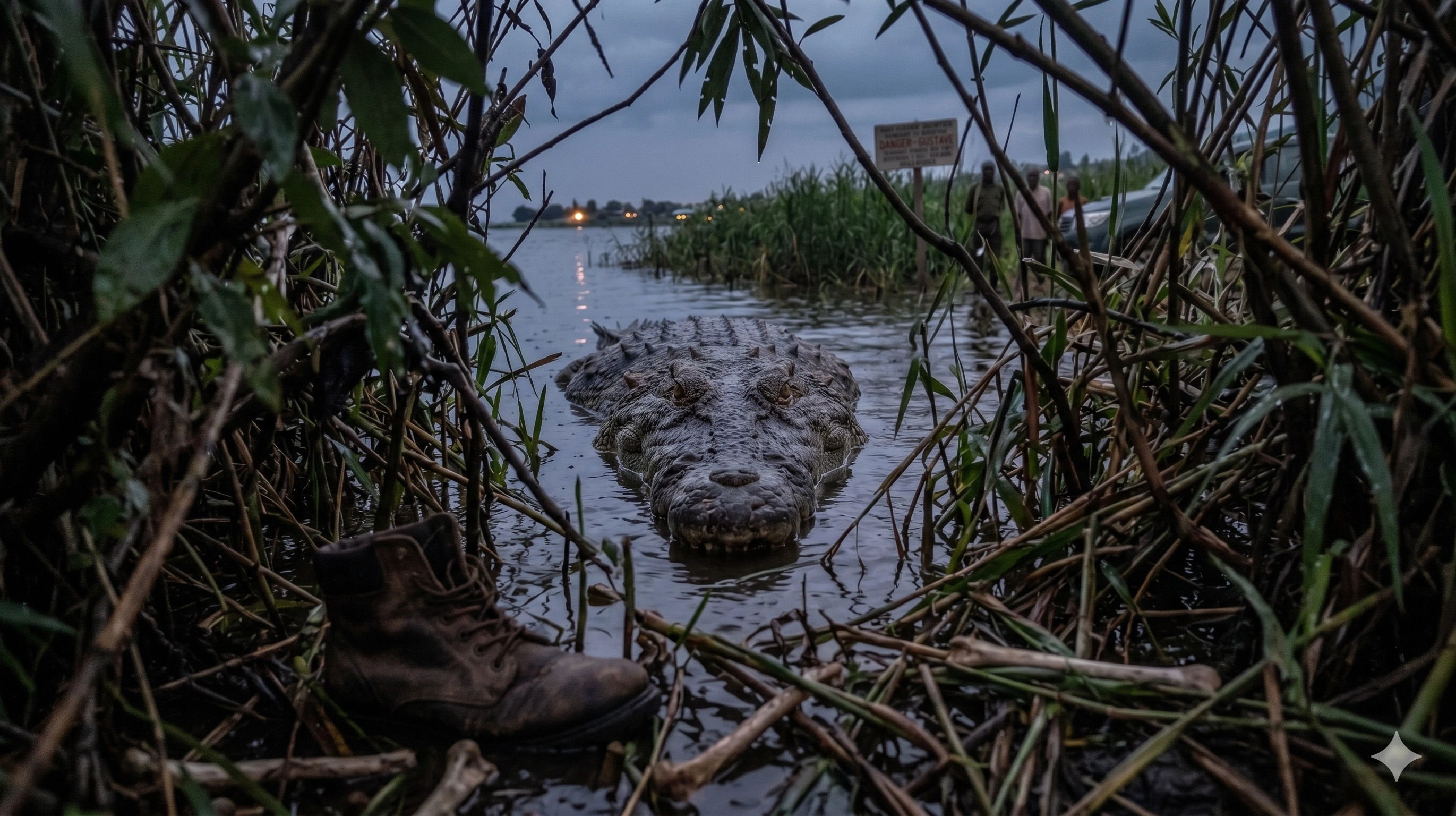
Gustave is a massive male Nile crocodile (Crocodylus niloticus) inhabiting the Ruzizi River delta and the northern shores of Lake Tanganyika in Burundi, East Africa. He is reputed to be one of the largest Nile crocodiles ever observed—estimated at 5.5 to 6+ meters in length and approximately 900 kilograms—and has been attributed with killing between 60 and 300 humans over a period spanning at least three decades, from the late 1980s to the 2010s. His exact kill count is impossible to verify, partly because his territory overlaps with a region devastated by the Burundian Civil War (1993–2005), during which corpses routinely entered waterways and may have been wrongly attributed to crocodile predation. Despite multiple capture attempts—including a heavily documented 2004 expedition—Gustave has never been caught, measured, weighed, or killed. His current status is unknown. He was last reliably sighted in 2015. Unverified claims of his death surfaced in 2019, but no evidence has been produced.
Estimated hatching year, based on size-to-age calculations adjusted for his full dentition.
First documented attacks attributed to an unusually large crocodile in the villages of Magara, Kanyosha, and Minago along the northeastern shores of Lake Tanganyika. National Geographic later confirmed records dating to this year.
Burundian Civil War. Estimated 300,000 dead. Corpses routinely enter the Ruzizi River and Lake Tanganyika. Many disappearances near water may be wrongly attributed to Gustave. Conversely, the chaos may mask genuine crocodile predation.
French expatriate and self-taught herpetologist Patrice Faye, living in Burundi, hears from fishermen that a colleague was eaten by an enormous crocodile. He begins investigating and discovers a pattern of attacks along the lake dating back a decade.
Faye formally names the crocodile “Gustave” and begins publicizing his existence to international media.
Faye tells the BBC that Gustave is “three times as big as the other crocodiles in Burundi” and cannot hunt normal prey due to his size. Media reports begin citing a kill count of 200–300 humans.
Faye conducts two years of field research, tracking Gustave’s movements and documenting attack patterns. He secures funding for a capture expedition.
PBS documentary “Capturing the Killer Croc” is filmed. A 907 kg, 9-meter trap cage with infrared cameras is deployed. Multiple baits fail. Giant snares catch only smaller crocodiles. A live goat is placed in the cage in the final week; the camera fails during a thunderstorm, and the next morning the goat is gone and the cage is partially submerged. Gustave is not captured. The team is forced to leave as civil conflict intensifies.
The Hollywood film “Primeval” is released, loosely based on the Gustave story.
Gustave is spotted again in the Ruzizi River near Lake Tanganyika after several years of absence.
Gustave is voted the 3rd most famous personality in Burundi in a national poll.
Faye reveals to author Richard Grant that he has documentation for approximately 60 deaths attributed to Gustave—far fewer than the 300 commonly cited in media.
Last confirmed sighting: a local resident reports seeing Gustave dragging an adult buffalo carcass into the river.
A writer for Travel Africa Magazine reports being told that Gustave was killed. No details of how, when, where, or by whom are provided. No photographs or physical evidence surface. The claim remains unverified.
Gustave’s status is officially unknown. If alive, he would be approximately 70–71 years old—well within the lifespan of a large Nile crocodile, which can exceed 100 years.