No Image
View Case File
CORROBORATED
Last updated: 18 Apr 2026
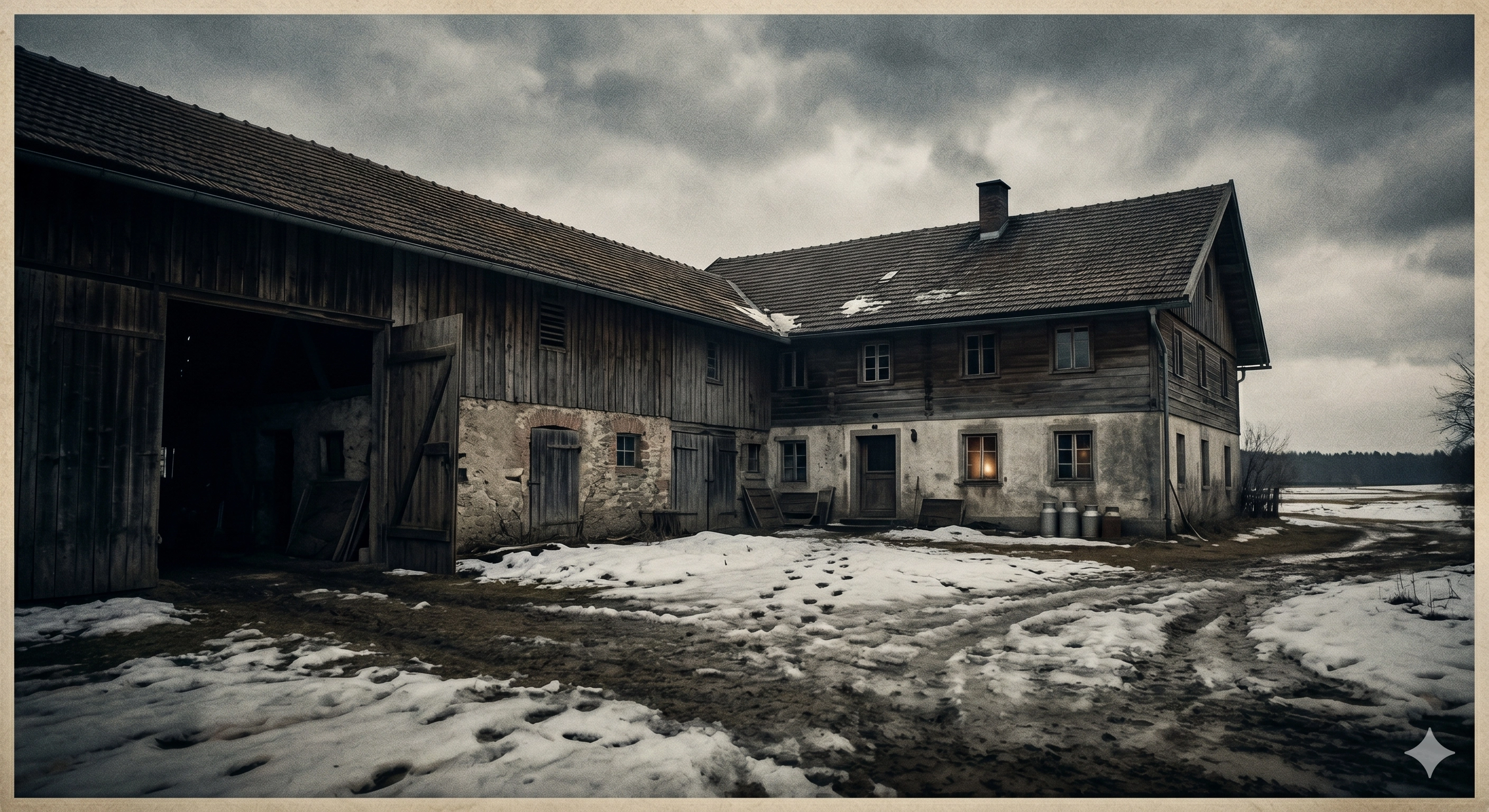
On the evening of 31 March 1922, six people were murdered with a mattock on an isolated farmstead called Hinterkaifeck, approximately 70 kilometers north of Munich, in the German state of Bavaria. The victims were Andreas Gruber (63), his wife Cäzilia (72), their widowed daughter Viktoria Gabriel (35), Viktoria’s children Cäzilia (7) and Josef (2), and the family’s new maid Maria Baumgartner (44), who had arrived at the farm just hours before her death. Four of the six victims—Andreas, his wife, Viktoria, and seven-year-old Cäzilia—were lured one by one from the house to the barn through the stable, where each was struck down with a mattock. The bodies were stacked and covered with hay. The killer then entered the house and murdered two-year-old Josef in his crib and Maria Baumgartner in her bedroom. The bodies were not discovered for four days. During that time, the killer remained on the farm. Livestock were fed. Meals were eaten in the kitchen. The calendar on the wall was turned to the next day. Smoke was seen rising from the chimney. Someone was living among the dead. In the days before the murders, Andreas Gruber had told neighbors about footprints in the snow leading from the forest to the farm—with no tracks leading back. The previous maid had quit, claiming the farmhouse was haunted after hearing footsteps in the attic. A Munich newspaper appeared on the property that no one had purchased. A house key disappeared. Someone was already there, watching, waiting—possibly for days or weeks before the killing began. Despite over 100 suspects interviewed, a 2007 cold-case re-examination using modern forensic techniques, and more than a century of investigation, the Hinterkaifeck murders remain unsolved. The farm was demolished in 1923. The mattock, found hidden in the attic during demolition, was the last piece of physical evidence. No one has ever been charged.
Hinterkaifeck farmstead built. Owned by the Gruber family.
Andreas Gruber and his daughter Viktoria are accused of incest via anonymous report. Both are tried and convicted. Andreas serves one year in prison; Viktoria serves a shorter sentence. The scandal is known throughout the local community.
Viktoria’s husband Karl Gabriel leaves for World War I. He is killed in action in 1914 (officially declared dead in 1917). Viktoria returns to live at Hinterkaifeck with her parents and children.
Josef Gabriel is born. Paternity is uncertain; Lorenz Schlittenbauer, a neighboring farmer, acknowledges paternity. The local community widely suspects that Andreas is the actual father.
The family’s maid quits, reportedly telling people that the farmhouse is “haunted” after hearing unexplained footsteps in the attic.
Andreas finds a strange Munich newspaper on the property that no one purchased. No one in the area subscribes to this newspaper. He initially blames the postman (who denies it).
Andreas discovers fresh footprints in the snow leading from the forest to the farm. The tracks lead only one direction—toward the farm. There are no return tracks. He tells neighbors but does not report it to police. That same night, the family hears footsteps in the attic. Andreas searches and finds no one. A house key goes missing. A lock on the machine room door is found broken.
According to a school friend of Cäzilia Gabriel (age 7), young Cäzilia reported that her mother Viktoria fled the farmstead the previous night after a violent argument with Andreas, and was found in the forest hours later.
New maid Maria Baumgartner arrives at Hinterkaifeck, escorted by her sister. The sister leaves after a short stay—likely the last person to see the household alive.
The murders. Andreas, Cäzilia Sr., Viktoria, and young Cäzilia are lured one by one to the barn through the stable and killed with a mattock. Bodies are stacked and covered with hay. The killer enters the house and murders baby Josef in his crib and Maria Baumgartner in her bed.
The killer remains on the farm. Livestock are fed. Food is consumed. The calendar is turned from March 31 to April 1. Smoke is seen from the chimney. Mail accumulates at the post office.
Coffee sellers Hans and Eduard Schirovsky arrive to take an order but cannot gain entry.
Seven-year-old Cäzilia has now missed three days of school. Neighbors grow alarmed.
A group including Lorenz Schlittenbauer enters the farm. They discover the four bodies in the barn (covered with hay) and the two bodies in the house. Police in Munich are notified.
Dr. Johann Baptist Aumüller performs autopsies inside the barn. Cause of death: blunt force trauma to the head. Weapon: mattock.
Lead investigator Georg Reingruber from Munich conducts investigation. Crime scene has been extensively contaminated by neighbors. Over 100 suspects are identified and interviewed. No charges are filed.
Farm is demolished. During demolition, a blood-stained mattock is found hidden in the attic and a penknife is found in the barn hay. These are the last pieces of physical evidence.
Schlittenbauer is discovered visiting the demolished farm site. When asked why, he states that the killer’s attempt to bury the bodies in the barn was “hindered by frozen ground”—a detail that implies intimate knowledge of the conditions at the time of the murders.
Schlittenbauer dies without ever being charged. He had won several slander lawsuits against people who called him the murderer.
German police re-examine the case using modern forensic techniques. No definitive conclusion is reached.
The case remains officially unsolved. The site where the farm stood has become a pilgrimage site for true-crime enthusiasts.