View Case File
PLAUSIBLE
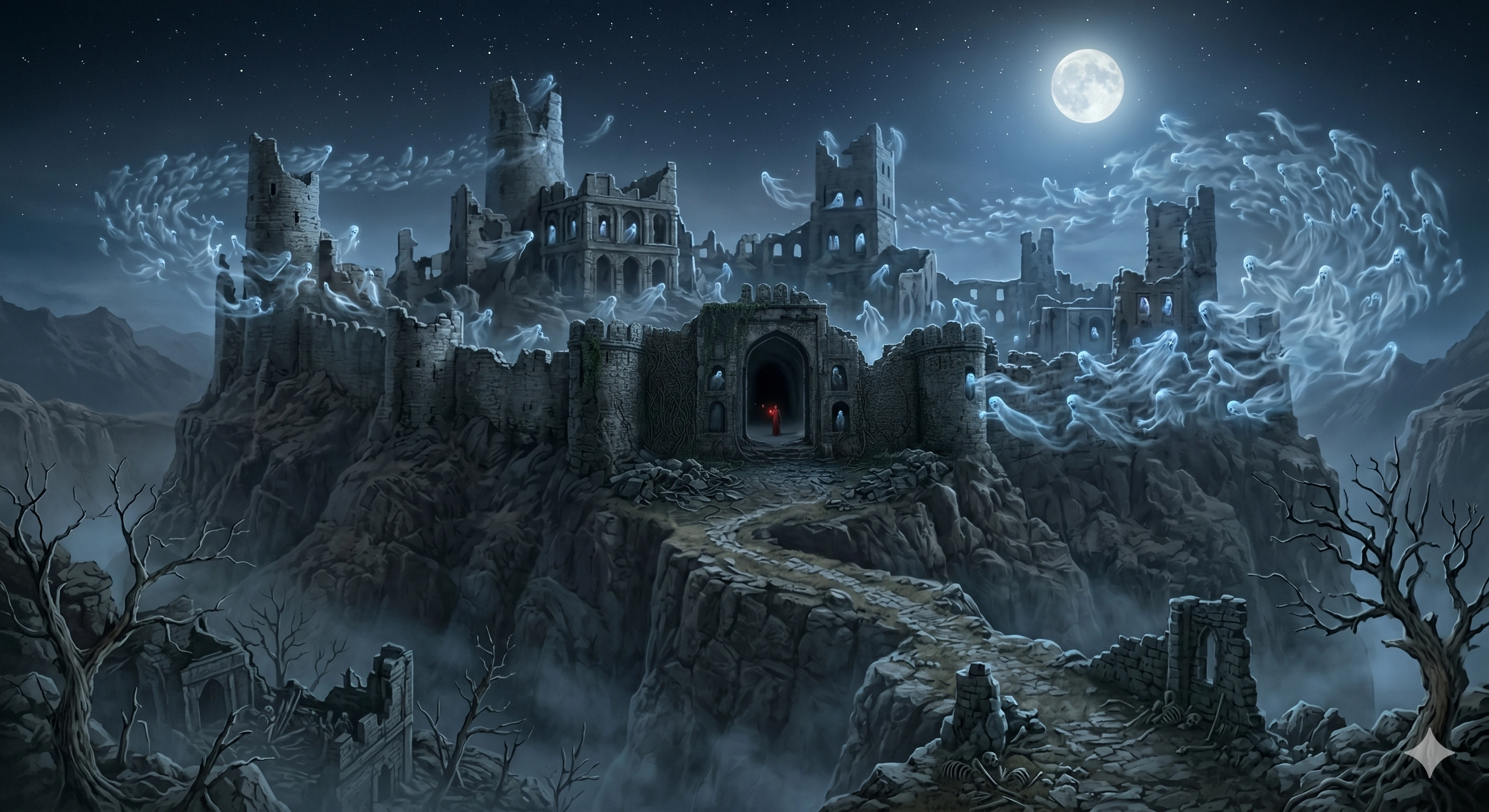
BHANGARH FORT: India's Most Haunted Place — Where a Curse, a Princess, and 10,000 Ghosts Guard an Abandoned City
Cursed History / Abandoned Fortress
Last updated: 18 Apr 2026
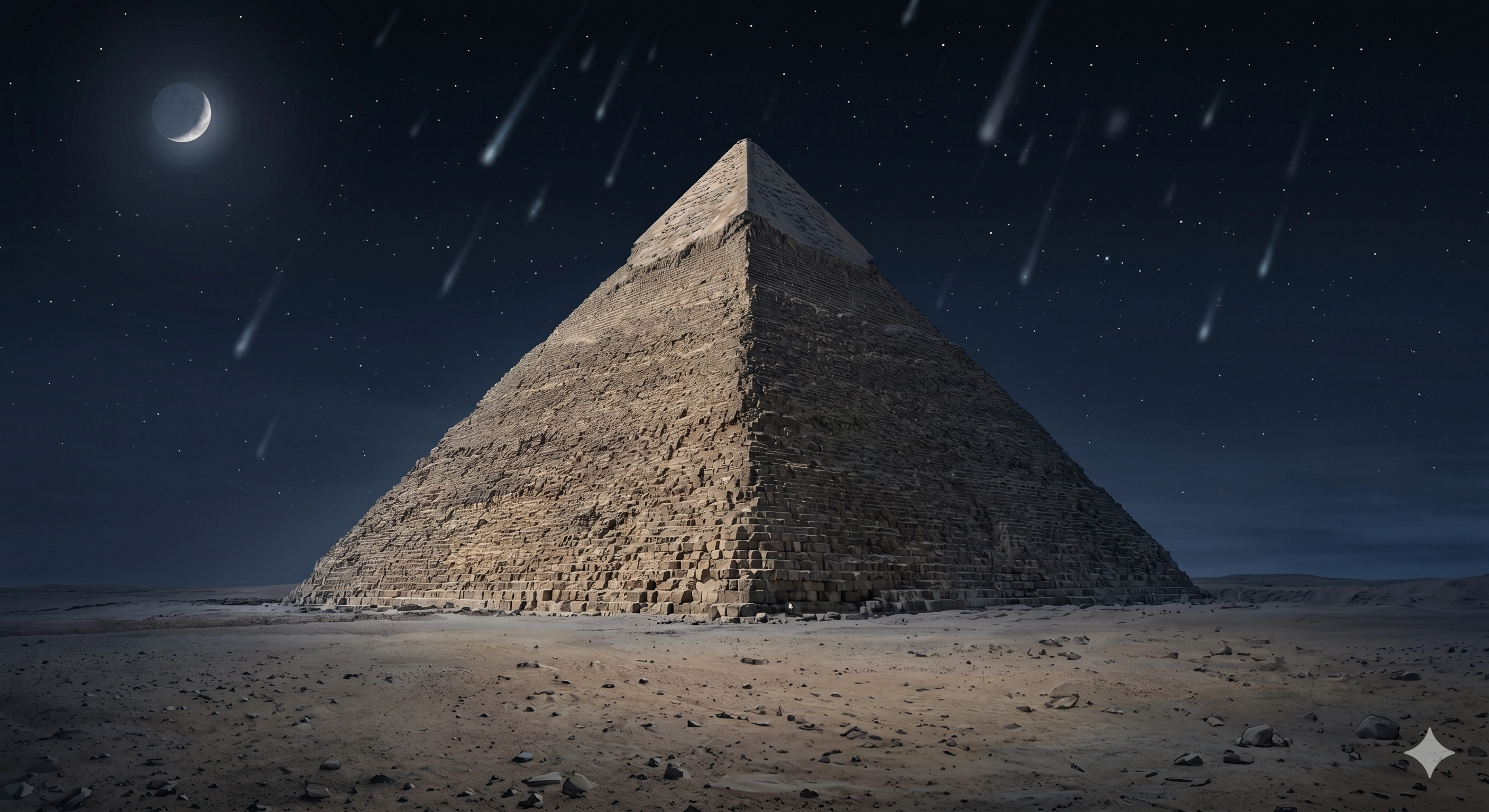
The Great Pyramid of Giza—built for Pharaoh Khufu c. 2560 BCE—stands 146 meters tall with ~2.3 million limestone and granite blocks. Three known chambers plus the Grand Gallery (46 m). In 2017, the ScanPyramids project using muon tomography discovered the "Big Void": a space at least 30 meters long above the Grand Gallery, confirmed by three independent detector systems (published in Nature). In 2023, they confirmed the North Face Corridor (9 m). The EGP Mission plans muon telescopes with 100× sensitivity for the first true 3D tomographic image. The Great Pyramid has not finished revealing its secrets.
The Great Pyramid of Giza is simultaneously the most studied and the least understood large structure on Earth. Its exterior has been measured, mapped, and photographed from every conceivable angle. Its known interior spaces have been explored for centuries. And yet, as the discoveries of 2017 and 2023 demonstrate, the pyramid still contains major architectural features that were unknown to the modern world until subatomic particles from outer space revealed them.
Muon tomography—originally conceived by Nobel laureate Luis Alvarez in the 1960s—exploits the fact that muons, produced when cosmic rays strike Earth's atmosphere, penetrate solid matter but are partially absorbed by dense material. By counting the muons that pass through the pyramid from various angles, researchers can create density maps that reveal voids.
The technique works. The Big Void is real—confirmed by three independent detector systems. The North Face Corridor is real—confirmed by endoscopy in 2023. The question now is what else the pyramid contains.
Great Pyramid completed for Pharaoh Khufu. Contains three known chambers, Grand Gallery, passages, five relieving chambers, two pairs of air shafts.
Caliph al-Ma'mun forces entry into the pyramid (Robbers' Tunnel), bypassing granite plug blocks.
Howard Vyse discovers the five relieving chambers above the King's Chamber.
Luis Walter Alvarez uses muon tomography to scan the Pyramid of Khafre. No new chambers found. Pioneering application.
Robot Upuaut-2 explores Queen's Chamber air shaft, discovering a blocking stone with copper fittings.
ScanPyramids project launched by Cairo University and HIP Institute.
ScanPyramids announces the 'Big Void' in Nature: ≥30 m long above Grand Gallery, confirmed by three independent muon detector systems.
ScanPyramids confirms the North Face Corridor: 9 m passage behind original entrance. Verified by endoscopy.
ERT independently confirms North Face Corridor. ScIDEP project begins building muon telescopes for Pyramid of Khafre. SAR claims of subterranean complex (unverified).
EGP mission: muon telescope system with 100× sensitivity for true tomographic 3D imaging.
Alan Bross, senior scientist at Fermilab and EGP project lead, describes being overwhelmed by the scale of the Great Pyramid on his first visit in 2010 and immediately thinking about how muon imaging could reveal its internal structure.
Lee Thompson of the University of Sheffield noted that the Big Void's detection by three independent muon systems makes the finding "very robust." Christopher Morris of Los Alamos called the results "pretty amazing."
Zahi Hawass, Egypt's former Minister of Antiquities, argues the Big Void may simply be normal construction gaps between large stones, designed to reduce weight and stress.
Jean-Pierre Houdin, the French architect who developed the internal-ramp construction theory, predicted the existence of the North Face Corridor years before its discovery through his "Noble Circuit" hypothesis.
When completed, the Great Pyramid was the most massive, most precisely engineered structure ever built. 2.3 million blocks, sides aligned to cardinal points within fractions of a degree, base leveled within 2.1 centimeters. Inside: the Subterranean Chamber, the Queen's Chamber, the King's Chamber with its granite sarcophagus, the Grand Gallery—a 46-meter corbelled masterwork—and mysterious air shafts whose purpose remains debated.
Luis Walter Alvarez used cosmic-ray muons to see inside the pyramids without touching them. The technique worked, but 1968 technology was limited. It would take nearly fifty years for the technology to catch up to Alvarez's vision.
Three separate teams used three different muon detection methods. All three detected the same thing: a void at least 30 meters long, with a cross-section similar to the Grand Gallery, located directly above it. The discovery, published in Nature, was the first major internal structure found since the 19th century.
A 9-meter passage behind the original entrance, predicted by Jean-Pierre Houdin's Noble Circuit hypothesis. Confirmed by muography and physically verified by endoscopy.
The EGP mission will deploy muon telescopes with ~100× sensitivity, producing the first true tomographic 3D image. If there are additional chambers, EGP will find them. The universe has been showering the Great Pyramid with muons for 4,500 years. For the first time, we will have the instruments to read what they are telling us.
Physical (Known): Three chambers, Grand Gallery, passages, five relieving chambers, Well Shaft, Grotto, two pairs of air shafts, granite sarcophagus, quarry marks including Khufu's name.
Muon Tomography (Confirmed): Big Void: ≥30 m long, above Grand Gallery, confirmed by three independent detector systems (Nature, 2017). North Face Corridor: ~9 m, confirmed by muography and endoscopy (2023), independently verified by ERT (2025).
Theoretical: Houdin's Noble Circuit hypothesis predicts connecting passage system. Multiple hypotheses on air shaft function.
Unverified Claims: SAR Doppler tomography (2025): claims extensive subterranean complex beneath Giza Plateau. Not verified by Egyptian authorities or independent researchers.