Latest EntryPLAUSIBLE
The Abyssal Megalodon Enigma
The architecture of human sanity relies heavily on the illusion of mastery over our environment. We map the continents, chart the stars, and classify the beasts of the field, comforting ourselves with the dogma of our own apex status. Yet, as scholars of the Global Institute of Occult and Unverified Phenomena, we recognize this supremacy as a fragile, epistemological construct. Nowhere is this vulnerability more glaring than at the shoreline. The world’s oceans represent a vast, hostile void—an alien environment on our own planet where humanity is, at best, a fleeting trespasser. It is within this context that we must re-examine the chilling dossier of Otodus megalodon, a case currently held under the status of "Open — Under Review" with a credibility grade of "Plausible".
To understand the sheer, terrifying magnitude of the anomaly, one must first confront the biological engine of the creature itself. Otodus megalodon was not merely a shark; it was a localized extinction event incarnate. For roughly 20 million years, this leviathan dominated the world’s oceans. Paleontological reconstructions indicate it grew to estimated lengths of 15 to 18 meters, equipped with jaws capable of producing staggering bite forces exceeding 180,000 newtons. Its fossilized teeth—massive, serrated biological weapons, some exceeding 17 centímetros in length—have been found distributed across every continent on Earth. The sheer scale of these remains dictates a creature that required an unfathomable caloric intake, feeding on the largest marine mammals available.
+1
The orthodox scientific consensus, a paradigm built on the comforting distance of deep time, dictates that this apex predator was driven to extinction during the Pliocene epoch. The accepted timeline places its demise at precisely 3.6 million years ago, based on the most recent verified fossil evidence. Mainstream marine biologists attribute this extinction to a convergence of environmental catastrophes: cooling ocean temperatures, the subsequent shifting of prey migration patterns, and fierce competition from the emergence of early great white sharks. It is a neat, sterile narrative. It allows humanity to sail the deep waters without the paralyzing dread of what might be swimming miles beneath their keels.
+1
However, the archives of the Institute tell a different, far more unsettling story. The cracks in the extinction dogma first appeared in 1875, during the pioneering HMS Challenger expedition. While dredging the deep, lightless plains of the Pacific seafloor, the crew recovered specimens of megalodon teeth. When analyzed, the initial manganese accretion dating suggested these biological artifacts were shockingly recent—dating back merely 10,000 to 15,000 years ago. While these dates were later fiercely contested and dismissed by a panicked academic establishment eager to maintain the accepted timeline , the discovery ignited a subterranean debate that has festered in the dark corners of marine biology ever since. The prevailing scientific position insists these Challenger teeth were contaminated, producing misleading dates. But within the Institute, we view this "contamination" as a convenient rug under which an terrifying paradigm shift was swept.
+4
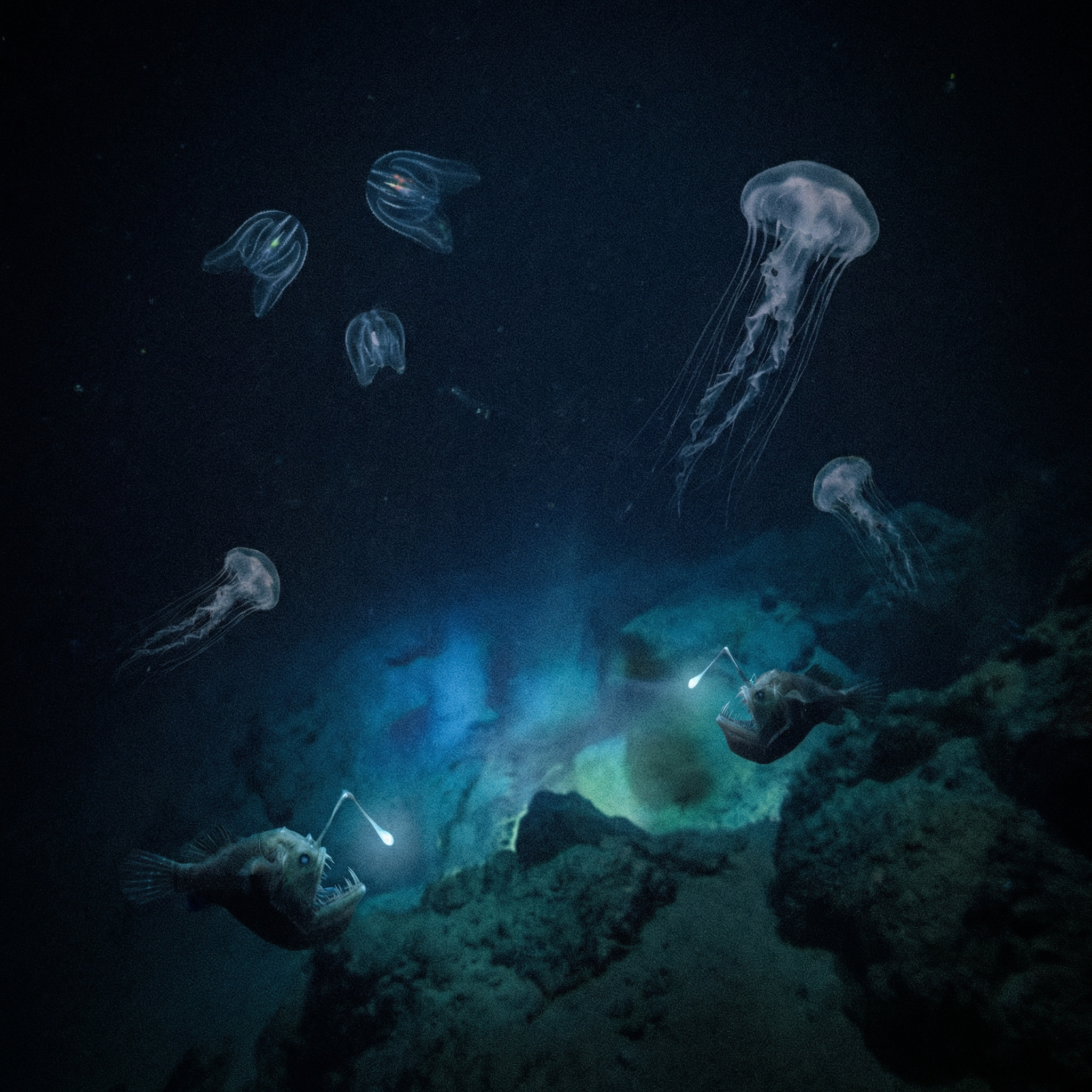
The central, haunting question persists: could a remnant population of apex predators of this incomprehensible scale remain undetected? The answer lies in the terrifying reality that the ocean is 95% unexplored below 1,000 meters. We have better topographical maps of the lunar surface than we do of our own bathypelagic zones.
This brings us to the visceral horror of the empirical human encounters. The most meticulously documented and cited account in our dossier comes from the 1963 publication "Sharks and Rays of Australian Seas" by the esteemed Australian naturalist David Stead. Stead, a man of rigorous scientific pedigree, documented an incident from 1918 that shattered the maritime community of New South Wales. He interviewed seasoned crayfish divers from Nelson Bay—men whose livelihoods and identities were inextricably bound to the sea. Following a routine excursion, these hardened mariners uniformly refused to ever return to the water, claiming they had encountered an impossibly large shark.
+3
Let us reconstruct the narrative of that day, stripped of myth and laid bare in its historical horror. It is 1918. The Tasman Sea churns under a heavy, grey sky. A fleet of small crayfish boats sits anchored off Broughton Island, their nets heavy with the morning’s haul. Without warning, the hydrodynamics of the localized area undergo a massive, inexplicable shift. The water changes; the surface flattens unnaturally, as if an immense, unseen volume is being displaced and pressed from below. Then, the anomaly breaches the visual threshold. A shadow rises from the abyss—a shadow longer than the boats themselves, wider than anything the fishermen have seen in their lifetimes on the sea. The creature moves slowly, with the terrifying, deliberate grace of an absolute apex predator, its massive dorsal fin cutting the water like a blade the height of a grown man.
+4
The divers described a creature that completely dwarfed their vessels, possessing a head "at least as long as the wharf". Stead recorded that the massive shark consumed their equipment effortlessly; nets, heavy pots, and the entire catch of crayfish vanished instantly into its devastating wake. The psychological impact on the witnesses was profound and irreversible. No one spoke. No one moved. They never returned to that site. Decades later, the analytical question remains: what did they see? Skeptics argue for the misidentification of known species, suggesting they saw unusually large great whites, basking sharks, or whale sharks, and that the psychological terror of the open water produced exaggerated size estimates. But seasoned divers do not abandon their generational trade over a basking shark.
+4
The Broughton Island incident is not an isolated anomaly. The Institute’s files contain deeply classified acoustic data that corroborates the biological presence of something massive in the deep. During the height of the Cold War in the 1960s, a South African naval report documented a highly anomalous sonar contact. At a depth of 900 meters, operators tracked an object "the size of a whale but moving like a fish". Submarines and whales possess distinct acoustic signatures and locomotive profiles; the object tracked off the African coast moved with the predatory, undulating kinematics of a massive chondrichthyan. Similar unverified sonar anomalies have been reported in deep-sea trenches by both military and research vessels worldwide.
+1
Furthermore, we must examine the anthropological evidence. Across the Pacific, multiple Polynesian oral traditions reference a primordial "devil shark". Crucially, these ancient narratives state that the entity surfaces only during deep-water upwelling events—when cold, nutrient-rich water from the abyssal plains is forced to the surface. This perfectly aligns with the most terrifying and plausible hypothesis in our dossier: Theory 1, the Deep-Ocean Refugium.
+1
This theory posits that a remnant population of Otodus megalodon survives in the crushing darkness of deep-ocean trenches, far below 4,000 meters. In this lightless realm, they sustain their massive caloric requirements by feeding on deep-sea whale species and giant squid. Proponents of this theory argue that the ocean’s vast unexplored volume provides more than sufficient habitat for a surviving population. While mainstream critics argue that megalodon’s known physiology was adapted strictly for warm, shallow coastal waters , evolutionary adaptation over three million years in an isolated environment could easily yield a cold-adapted variant capable of surviving the abyssal pressures. Alternatively, we must entertain Theory 5: Convergent Evolution, which suggests a completely separate, unrelated species of giant shark has evolved to fill the exact same terrifying ecological niche in the deep ocean, explaining the massive sightings without requiring the direct survival of the Miocene predator.
+3
Scientifically, this case serves as a profound and humbling lens for examining the limits of negative evidence. The sheer absence of verified modern physical remains or imagery is often touted as absolute proof of extinction. However, the absence of evidence is not evidence of absence. The ocean’s sheer, incomprehensible volume makes definitive claims of absence extraordinarily difficult, if not intellectually arrogant. From a cultural and psychological perspective, the megalodon occupies a unique space at the intersection of rigorous paleontology and speculative cryptozoology. Unlike mythological entities, the creature's existence is a hardened scientific fact; the only variable in question is its continued survival. This lends the investigation a chilling legitimacy. It represents humanity’s deep-seated, primal fear of the ocean’s unknown depths—thalassophobia given teeth. The creature’s relentless persistence in popular culture reflects an archetypal anxiety about what lies beneath the fragile safety of the surface.
+4
The Global Institute of Occult and Unverified Phenomena maintains this dossier as an open investigation due to the ongoing, startling discoveries of "living fossils" in deep-sea environments, the vastness of the unexplored ocean, and the unresolved questions surrounding the Challenger dredging. As autonomous deep-sea exploration vehicles push further into ecosystems below 4,000 meters, we anticipate a paradigm-shattering discovery. Until then, we must live with the paralyzing knowledge that somewhere in the global ocean basins, in the freezing, crushing dark beneath the Mariana Trench or the South Pacific, the apex predator of Earth's history may simply be waiting in the abyss.
+4